The bioeconomy is becoming an increasingly key topic for sustainable development and innovation not only in the Czech Republic, but also in the broader European context.
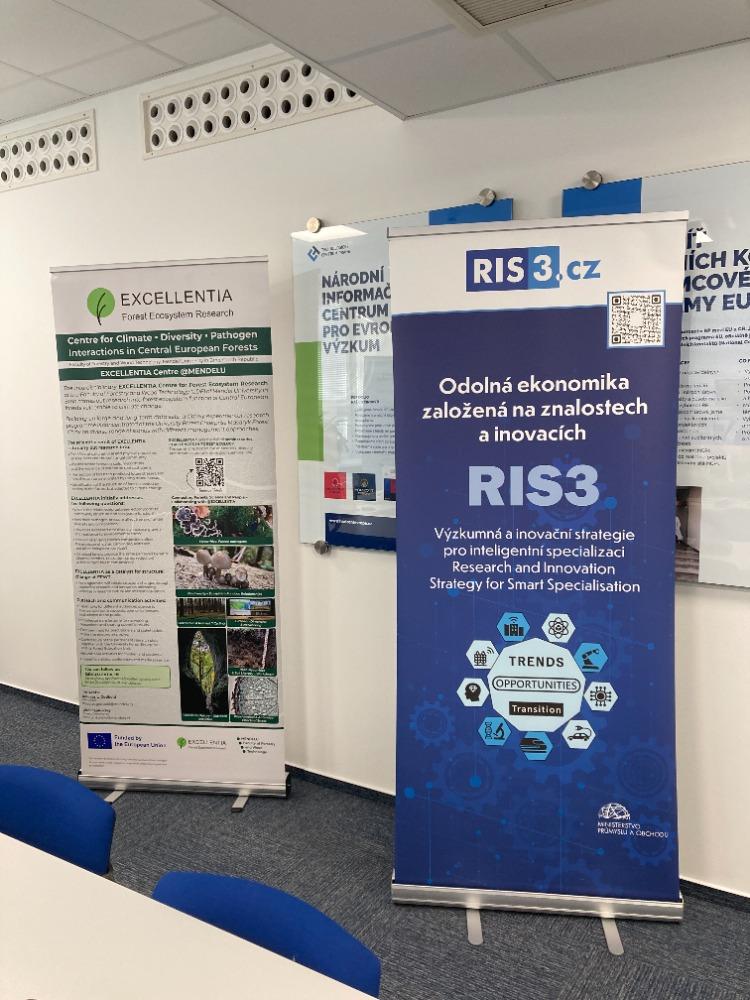
The third annual National Bioeconomy Congress under the patronage of the BioEast Hub Czech Republic initiative took place on December 11, 2025 at the Technology Center Prague (hereinafter referred to as the “Congress”). The Congress gave experts, entrepreneurs, scientists and public administration the opportunity to discuss current challenges and opportunities in the field of bioeconomy for the Czech Republic. Some of the main points of the program were: presentation of the new European Strategy for the Bioeconomy, discussion of the priorities of the National Action Plan for the Support of the Bioeconomy, how to integrate the bioeconomy into the new Common Agricultural Policy. Representatives of the National RIS3 Strategy were invited to participate in a panel discussion, where they mainly discussed the support and importance of the bioeconomy in the Czech Republic. They mentioned that the National RIS3 strategy itself contains a priority area to support the development of the bioeconomy in the Czech Republic in R&D&I application sectors in the specialization domain "Green technologies, bioeconomy and sustainable food resources" (hereinafter "DS08"), they further mentioned that the bioeconomy area is also supported by two missions: "Improving the efficiency of material, energy and emission intensity" and the mission "Strengthening the resilience of society against security threats". They also emphasized that the "DS08" National RIS3 Strategy is closely linked to the new European Strategy for the Bioeconomy and the "Earth II" program of the Ministry of Agriculture, especially in the following areas: sustainable use of biological resources, support for applied research and innovation (biotechnology, biomaterials, bioenergy, bioprocessing, etc.), strengthening competitiveness and economic added value (creation of new innovative companies, creation of new jobs, etc.). Jan Radoš from the Ministry of Agriculture of the Czech Republic and Rastislav Raši from NLC Zvolen also accepted the invitation to the panel discussion, both of whom assessed the bioeconomy area as strategically key for environmental sustainability. Both perceive the bioeconomy as a cross-cutting area that connects agriculture, industry, chemistry, energy, materials research and environmental technologies. Together with representatives of the National RIS3 Team, they agreed that it is important to strengthen national and regional bioeconomy value chains from primary production through processing to final products with high added value, and it is this tool that will lead to economic stability of regions and rural development.
Another point of discussion was the issue of financing, which will be very important for the implementation of innovative projects for the bioeconomy. Given the limited EU funds for R&D&I in the next programming period, it is and will be important to look for new financing instruments on the international, European and national level. “One of the main and key instruments for financing the bioeconomy will be the European Competitiveness Fund,” emphasized Jan Nedělník from BioEast Hub Czech Republic and member of the National Innovation Platform Sustainable Agriculture and Environmental Sectors.
The congress program offered a number of examples of good practice that demonstrated how the bioeconomy can be successfully implemented. Projects focused on the use of agricultural and forestry residues, the development of high-value-added biotechnology, innovations in the food industry and new biomaterials replacing fossil raw materials were presented. Participants had the opportunity to learn about examples of good practice that emerged thanks to the cooperation of research organizations, companies and public administration, often with the support of tools linked to the RIS3 strategy. Another important topic of the congress was the role of regions and their involvement in the development of the bioeconomy. The congress presented examples of successful projects:
- in research and innovation that have a practical impact, for example in the areas of biomass utilization (GreenWool – organic fertilizer from sheep wool),
- in agroecological research combined with the principles of the so-called living laboratories (International ConservES Project; National Center for Agricultural and Food Research),
- in the comparison of organic and conventional agriculture (HODEZ Project; IEEP),
- in the protection of biodiversity (OKliBio Project; IEEP),
- in the use of primary biomass as a source of compost for land reclamation (Rekultivácia ornej pôdy znehodnotenej zažbú trku pomoco compostu aktivaného Baktériolitom; Product Feed a.s., SK),
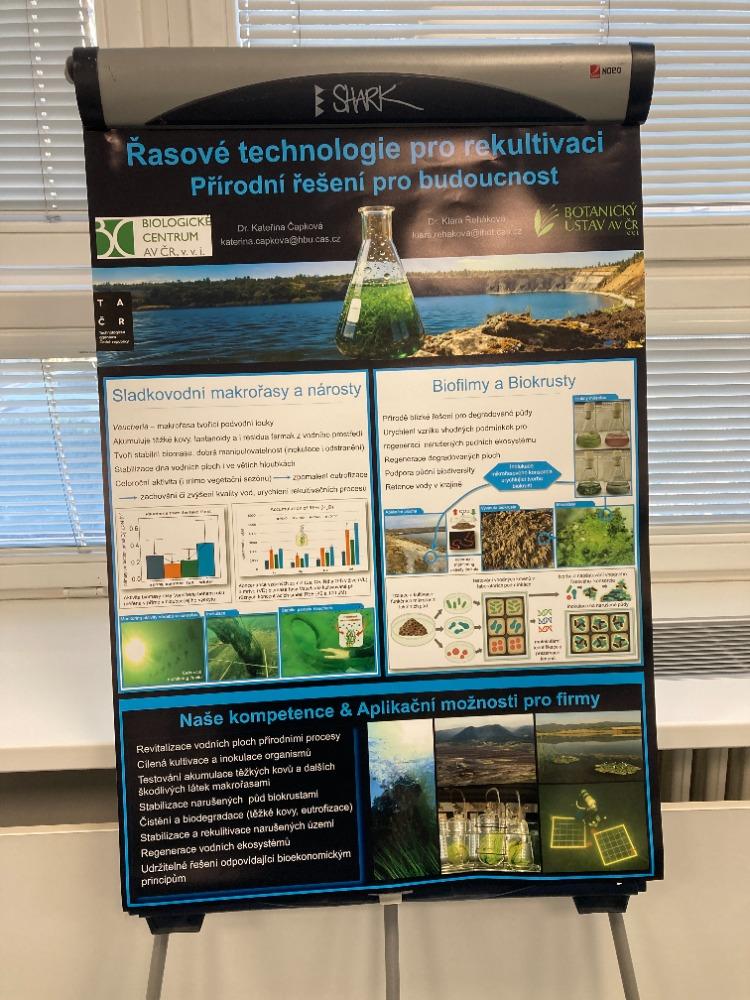
- in the revitalization of water bodies (Algal technologies for reclamation – natural solutions for the future; Botanical Institute of the Academy of Sciences of the Czech Republic, v. v. i.),
- in the transition of companies to circular and digital production (B2GreenHub: Support in the area of circular and digital production; Regional Innovation Center of the Karlovy Vary Region),
- opportunities for participation in Agroecology Partnership calls (Agroecology Partnership: tools for agroecological transformation and agricultural sustainability in the Czech Republic and the EU; Institute of Environmental Safety, Faculty of Logistics and Crisis Management, Tomas Bata University in Zlín).
The main message of the congress was also the fact that bioeconomy in practice means concrete implemented projects, not just strategic documents, that the path to a sustainable future leads through cooperation, innovation and the courage to change established practices. The congress became proof that bioeconomy is not just a vision for the future, but already today brings concrete solutions that have a positive impact on the economy, society and the environment. We thank Jan Nedělník and Maria Kubáňková BIOEAST HUB CR for the invitation to the National Bioeconomy Congress. We are glad that we are creating the future together.
Photo gallery