!!! HTML links lead to pages in Czech.!!!
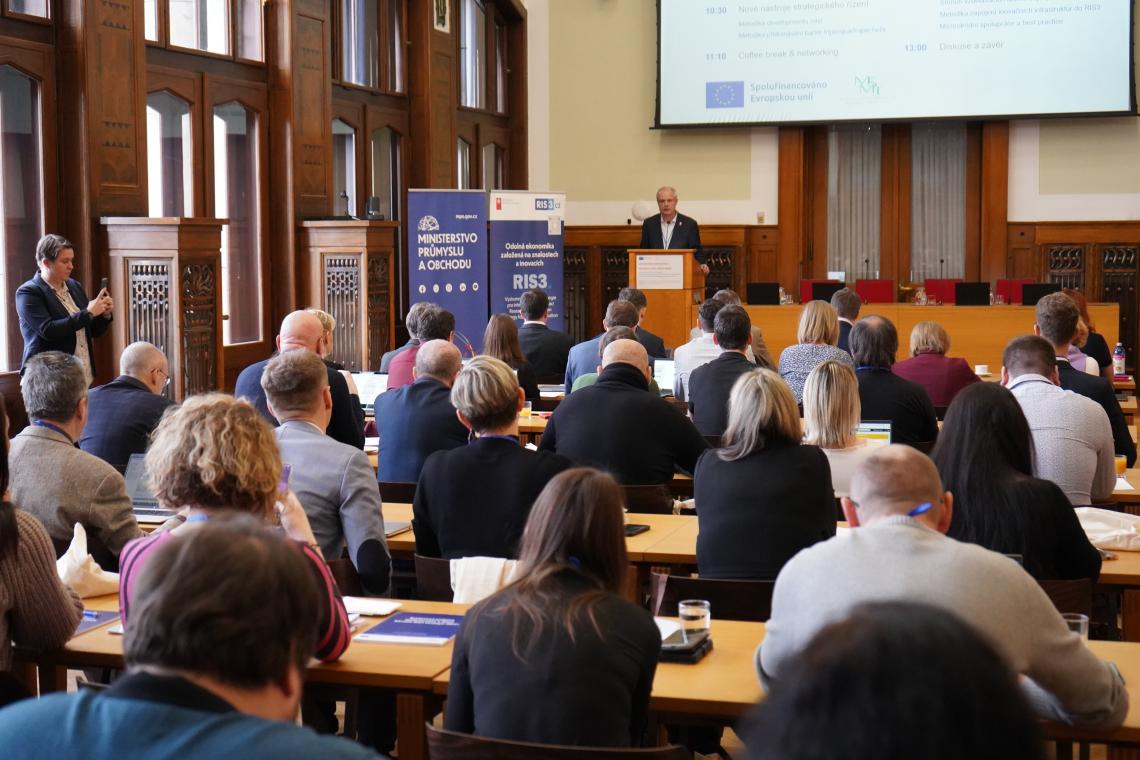
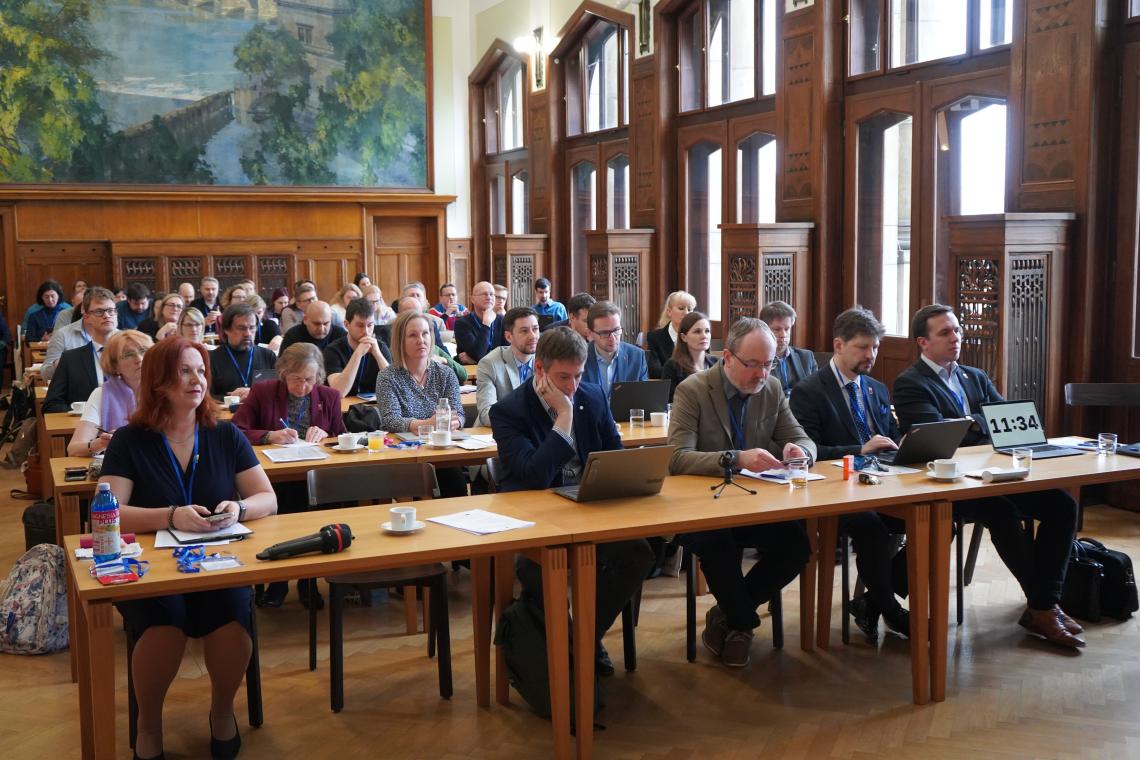
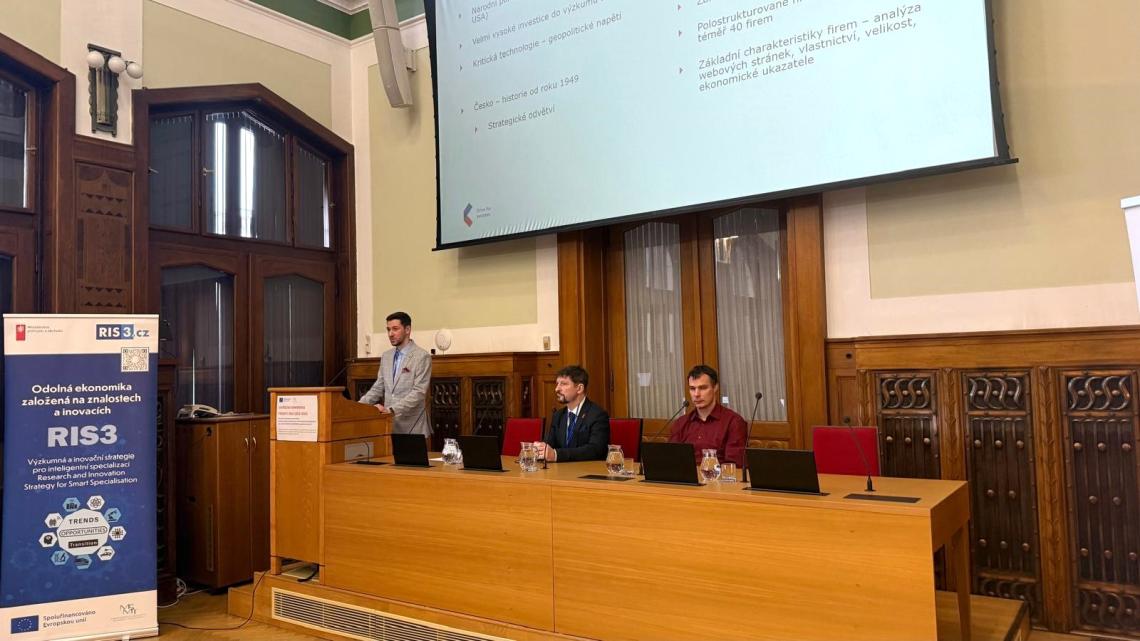
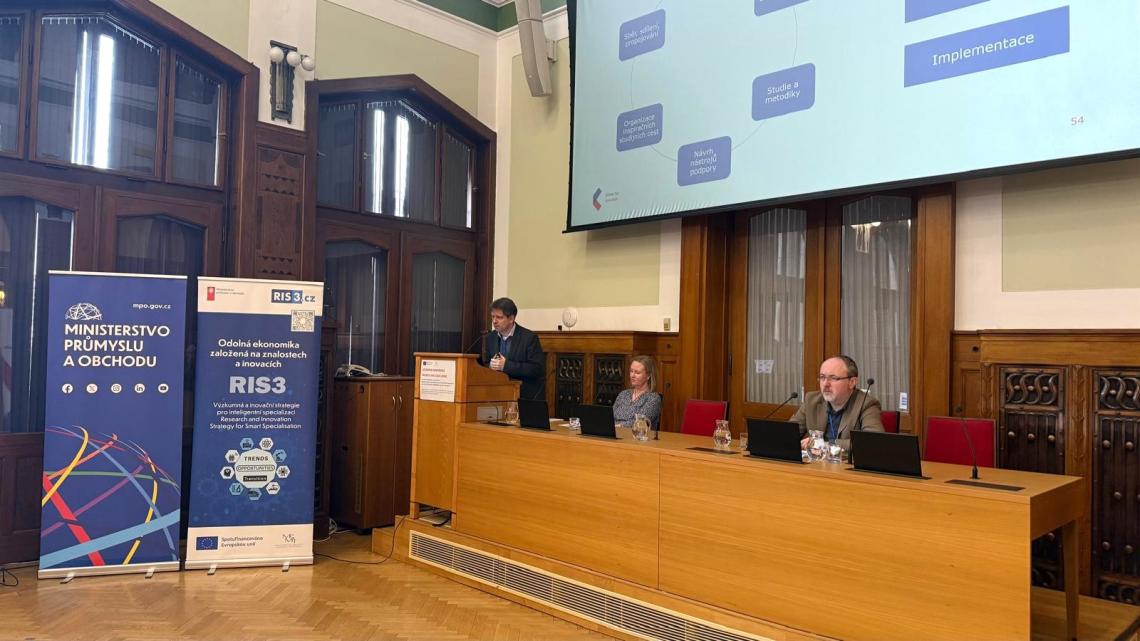
The final conference of the project System Support for the Implementation and Management of the National RIS3 Strategy 2023+ took place at the Ministry of Industry and Trade of the Czech Republic on February 4, 2026. The project, co-financed by the Johannes Amos Comenius Operational Programme, aimed to strengthen the innovation performance of the Czech Republic through systematic, data-based and coordinated management of the RIS3 Strategy.
Over the course of three years (2023–2026), a number of key outputs were created that will contribute to more effective coordination between state administration, research organizations and businesses, to a more precise focus of support on areas of industrial transformation and to the development of regional innovation ecosystems. The project also significantly brought the Czech innovation environment closer to current European trends.
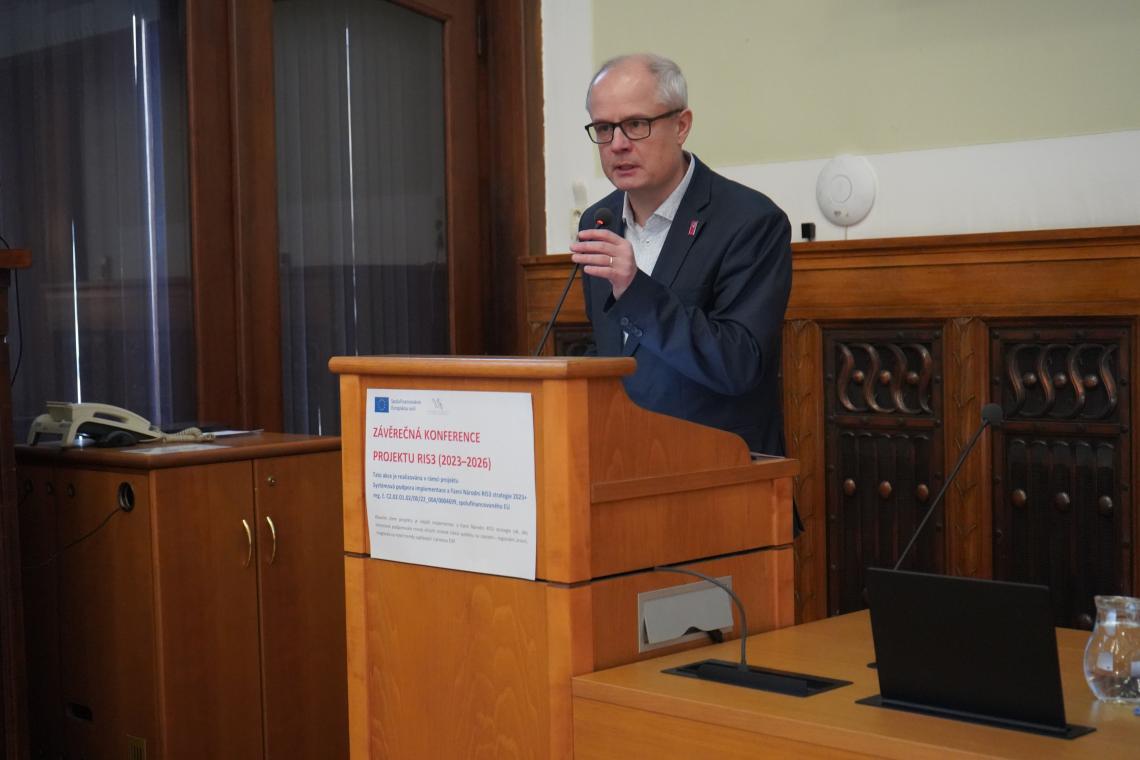
“We focused on three main topics,” said Tomáš Holinka, Head of the S3 Strategy Department of the Ministry of Industry and Trade. “Strengthening the innovation ecosystem at the national and regional levels, developing the capacities of the national RIS3 team and targeting activities on priorities built on the strengths of smart specialization.”
The project was implemented by the Ministry of Industry and Trade in cooperation with partners – CzechInvest and the Technology Agency of the Czech Republic (TA CR). Both organizations contributed to the implementation of key activities with their specific knowledge and expertise.
A significant output of the project is the methodological and practical support of the so-called missions – a new innovation policy tool. The Mission Development Methodology was created, which summarizes the principles of mission life cycle management, and the PlayBook, which uses attractive visualization to convert the individual steps of the mission into a clear and practically usable process.
The project also brought extensive analytical materials based on mapping supply chains in the areas of semiconductors, batteries, artificial intelligence and startups. The entrepreneurial discovery process (EDP) was also strengthened, in the form of more intensive inter-regional cooperation, more flexible involvement of regional experts in the National Innovation Platforms and the creation of the Methodology for Overcoming Triple and Quadruple Helix Barriers, which presents ways to involve the public in the development of regional innovation ecosystems.
One of the most valuable results of the project is the fundamental expansion of the RIS3 portal, which was supplemented with a large amount of data and analytical outputs. The project merged data from a number of disparate information sources and made them available in the form of tables, graphs and dashboards. The result is a modern and user-friendly platform for monitoring, analysis and decision-making in the field of research, development and innovation in the Czech Republic.
Significant attention was also paid to innovation infrastructures. In addition to the Methodology for their involvement in RIS3, inspiring examples from abroad were presented, usable by members of national and regional RIS3 teams. Initiatives created in connection with the project include, for example, the Czech Living Lab Platform.
The project also offered a rich range of educational events responding to the needs of the regions. 14 training courses and workshops were held, attended by more than 500 participants. The possibility of personal consultations with experts and sharing good practice from individual regions was evaluated very positively.
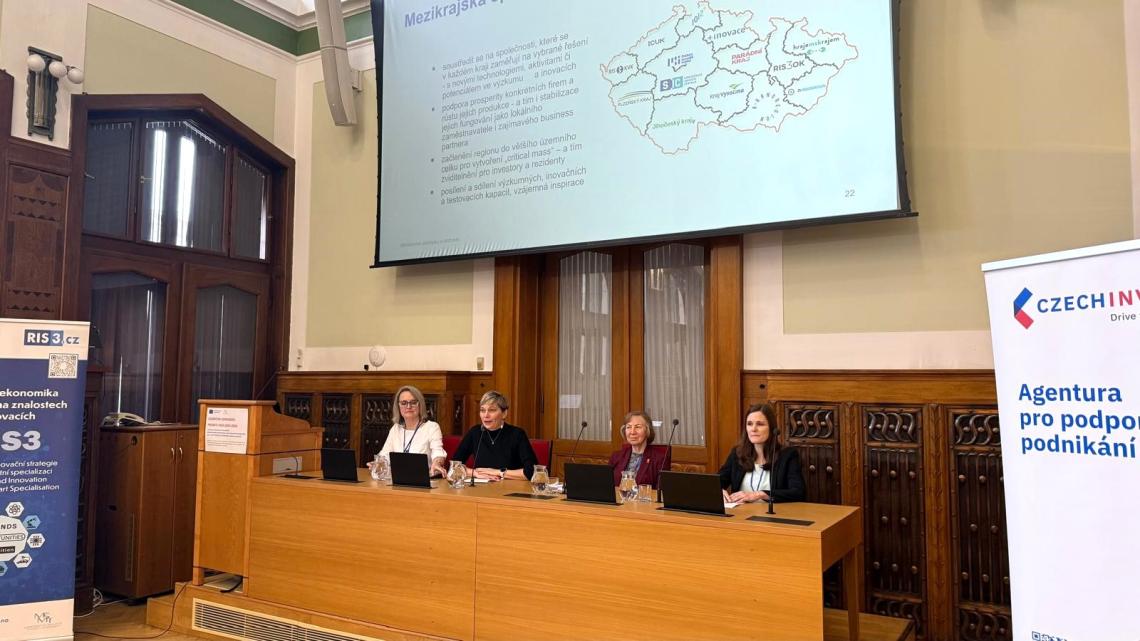
Representatives of the Project Steering Committee appreciated its contribution: René Samek (CzechInvest) emphasized the importance of the project for the agency's activities, especially in the area of mapping the innovation, business and investment environment and working with data on priority sectors. Petr Matolín (TA CR) stated that the outputs are usable not only for TA CR, but also for regions and other R&D&I support providers.
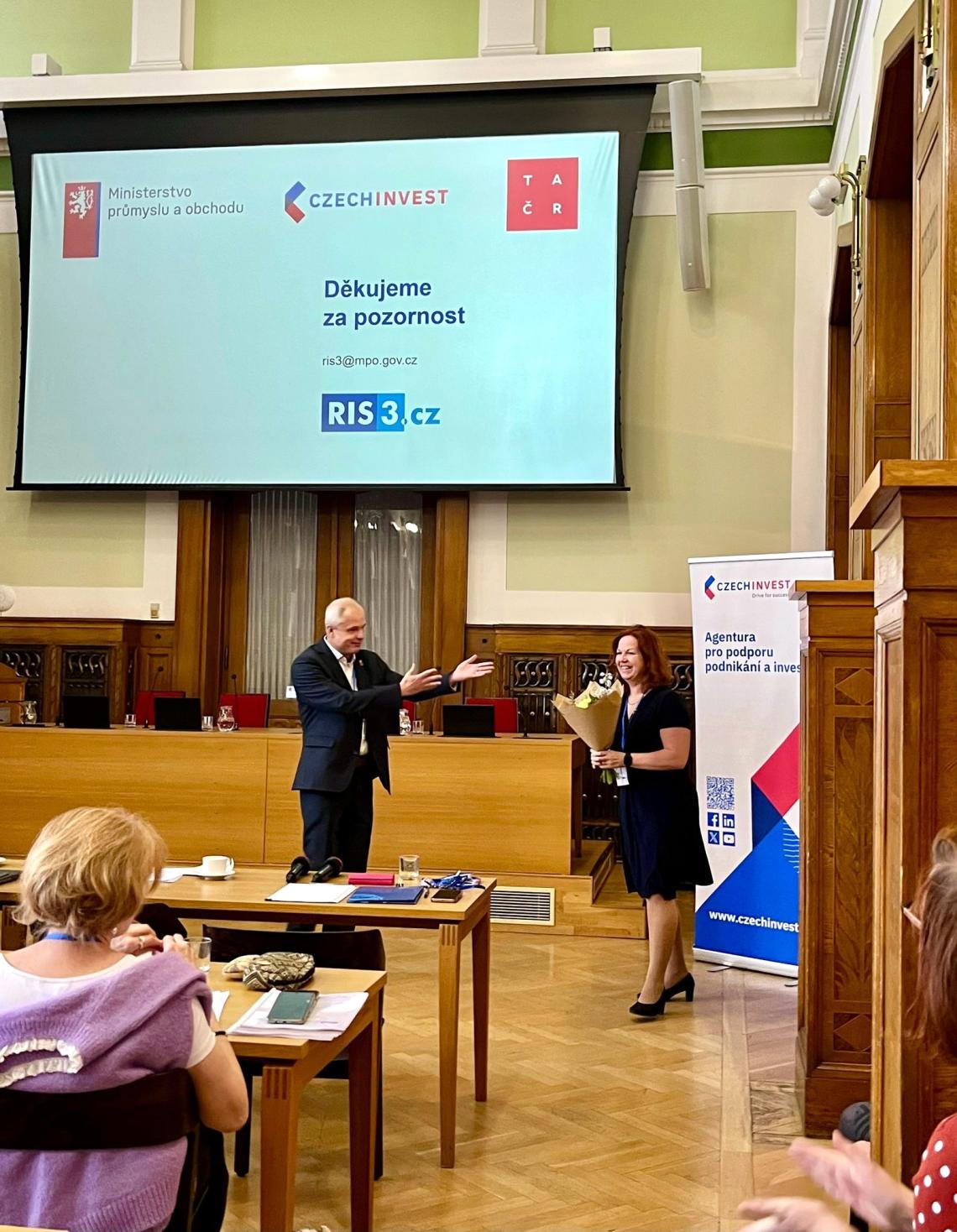
In conclusion, Tomáš Holinka thanked the entire project team from the Ministry of Industry and Trade, CzechInvest and TA CR, as well as the regional RIS3 teams and support providers, and together with partners presented the continuation of selected activities in the follow-up system project for the period 2026–2028 and beyond. The activities will be based on the basic principles of the smart specialization strategy – prioritization, EDP and implementation – and their aim will be to increase the research and innovation potential of the domestic economy.
Presentations from the Final Conference are available for download here.
Photo gallery